 KAI-GeoEnergy: geothermal reservoir modelling, live preview
Know how the deep subsurface will respond, before and during geothermal or storage operations.
KAI-GeoEnergy
Geothermal, CO₂ and hydrogen storage models
Geothermal doublets, CO₂ stores and hydrogen stores all ask the same of the subsurface: take the pressure and temperature change, without fault slip, subsidence or leakage, for decades. The data to judge that is scattered across wells, seismic, laboratory tests and monitoring networks, and the uncertainty is rarely carried through.
KAI-GeoEnergy turns that data into one process-based model of your site, built on KAI-Subsurface and carried across the scales: rock types from core, bedding upscaled by flow, facies between the wells, then the reservoir. It simulates fluid flow, heat and stress for each operating plan. As monitoring data arrive, the ensemble of models is updated, giving you a living forecast of pressure, temperature, ground motion and seismic risk, with its uncertainty, in your own workspace.
What it does- Reservoir Lab: plan a doublet and see 30 years of temperature, heat and pressure with P10–P90, in your browser
- Full ensemble runs on the KAI engine, queued from your workspace
- KAI-Pilot: ask in plain words whether a doublet can deliver; every number linked to the run that produced it
- Utah FORGE flagship case, every number from open notebooks
- Heterogeneity kept from the plug to the reservoir, not averaged away
- In build: fault-slip, subsidence and caprock checks, and CO₂ and hydrogen storage
Live preview: the Reservoir Lab runs in your browser and queues full simulations on the KAI engine from your free workspace. Results are simulated and labelled. Fault-slip, subsidence and storage modules are still in build.
From the core plug to the reservoir, without losing what controls flow
Flow underground is decided by structures smaller than a log can see and larger than a core can hold. Most models average them away. KAI carries each property up the scales, from the plug to the bed, the ground between the wells and the whole reservoir, with process-based models of how the sediment was laid down, and keeps the uncertainty at every step. The two labs let you try the first steps in a browser.
- cmCore plug
Quality-controlled core, rock types and permeability for uncored wells, tested blind.
Zeerijp-3A case → - cm–mBed
Bedding models calibrated on the plugs, upscaled by flow: which sample gives a vertical permeability you can trust.
Plug-to-Block Lab → - m–kmBetween wells
Facies ensembles conditioned on every log: the chance of good rock anywhere, and what a simplified model costs in flow.
Heterogeneity Lab → - kmReservoir
The site model with flow, heat and stress simulated for each injection or production plan.
Reservoir Lab → - yearsOver time
A digital twin: the ensemble updated as monitoring data arrive, so forecasts of pressure, temperature and ground motion stay current.
The solution →
A core plug can be a thousand times wrong about vertical flow
Plugs from the Groningen Rotliegend (well Zeerijp-3A) show vertical and horizontal permeability about equal. Ripple-laminated bedding models calibrated on the same plugs, upscaled by flow simulation, give a vertical-to-horizontal ratio of 0.003 to 0.05 at one metre when a fifth to two-fifths of the rock is mud. Plugs cut in the sandstone, where laboratories cut them, overstate vertical permeability 20 to 1,200 times. That ratio decides how a CO₂ or hydrogen plume rises, how pressure spreads, and when cold water reaches a geothermal producer.
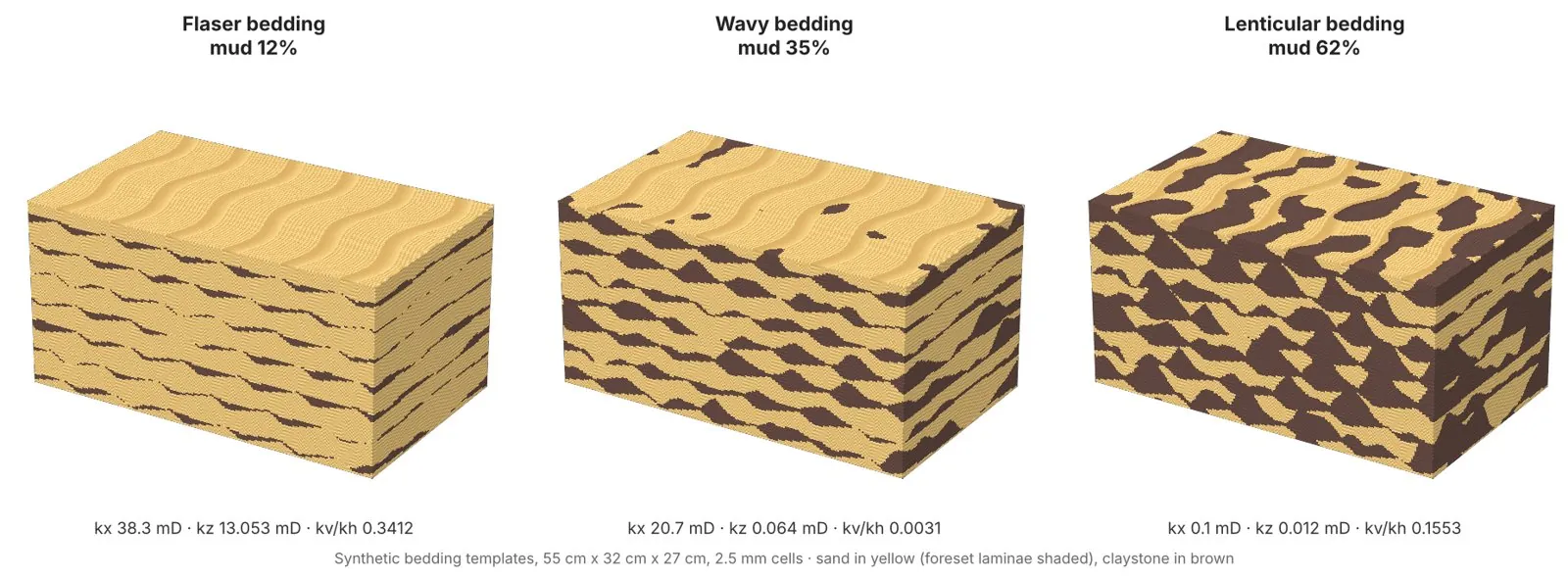
- Horizontal permeability settles within decimetres in sand-rich rock and follows the arithmetic average
- Vertical permeability needs decimetres to a metre and moves towards the harmonic average as mud increases
- Plugs cut in clean sandstone sit two to three orders of magnitude above the bed-scale vertical permeability
- KAI-GeoEnergy builds this into the site model, so storage and geothermal forecasts keep the layers that control flow
Products you can use now
 GroundWater Analyst
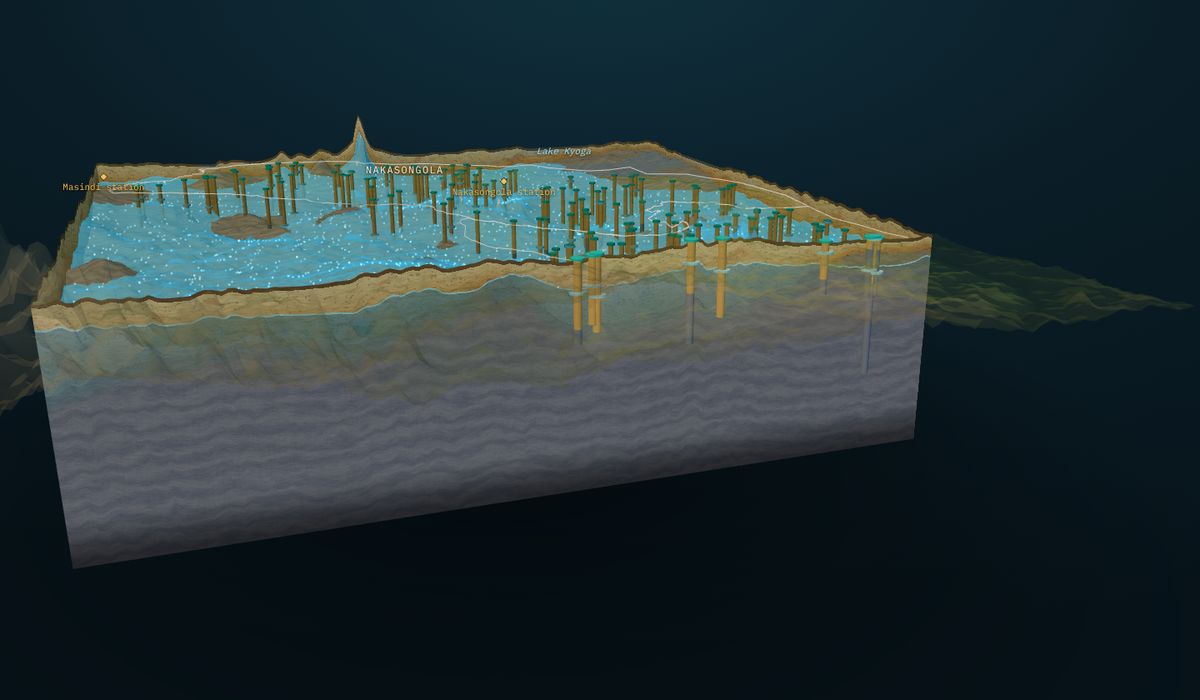
3D groundwater models from borehole records: water table, bedrock, aquifer layers, boreholes and flow, with cross-sections anywhere.
Free plan · paid from $149 per site
 HydroSaaS
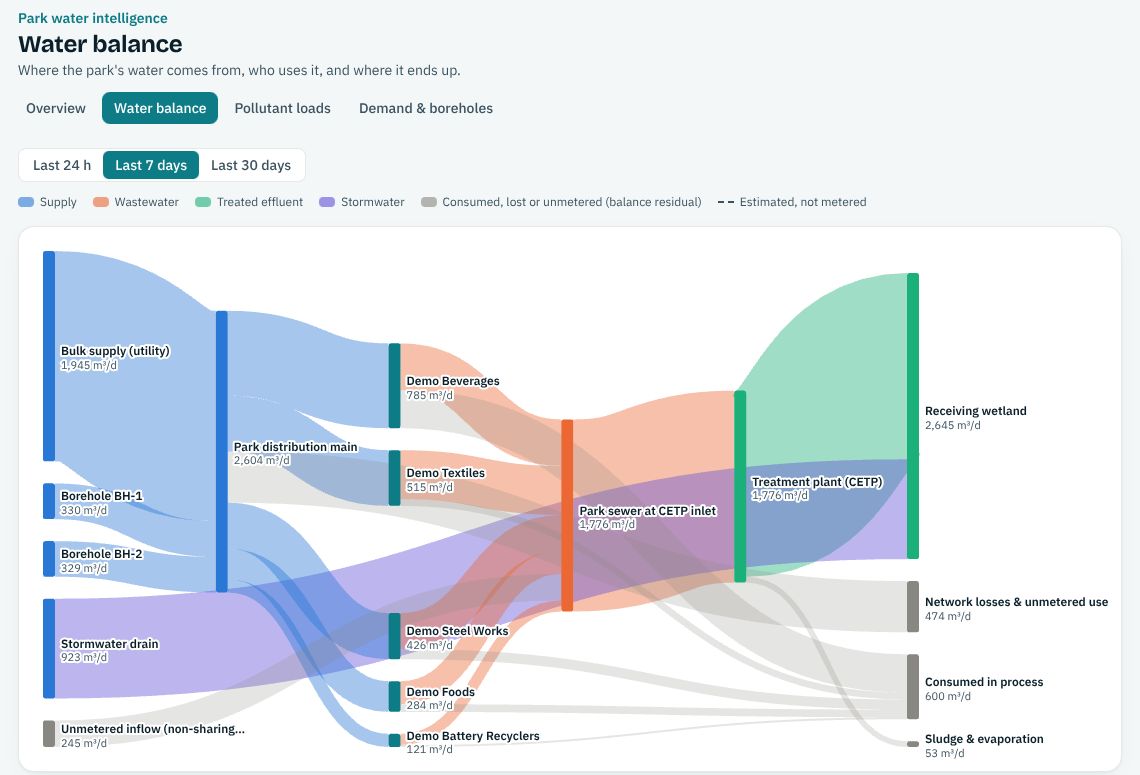
Water balance, pollutant loads and sources, demand and borehole drawdown, and effluent compliance against NEMA limits.
Free plan · paid from $99 per month
 KAI-Hydro
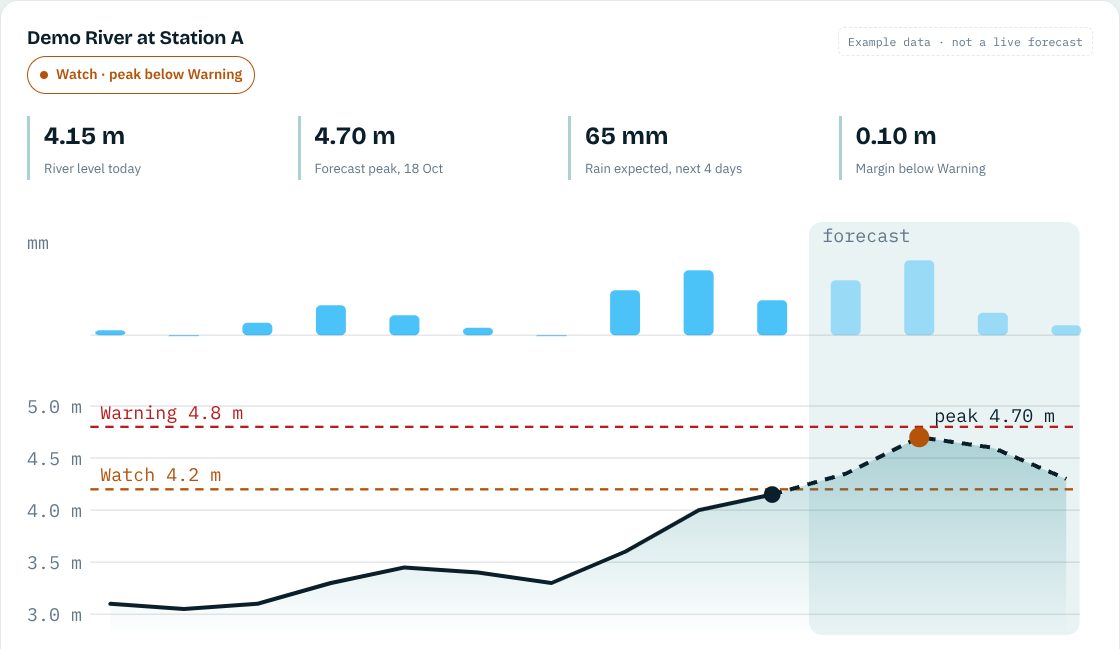
Parametric flood triggers back-tested against river gauges, and daily flood and drought forecasts ending in a plain Normal, Watch or Warning.
Free plan · paid from $190 per month
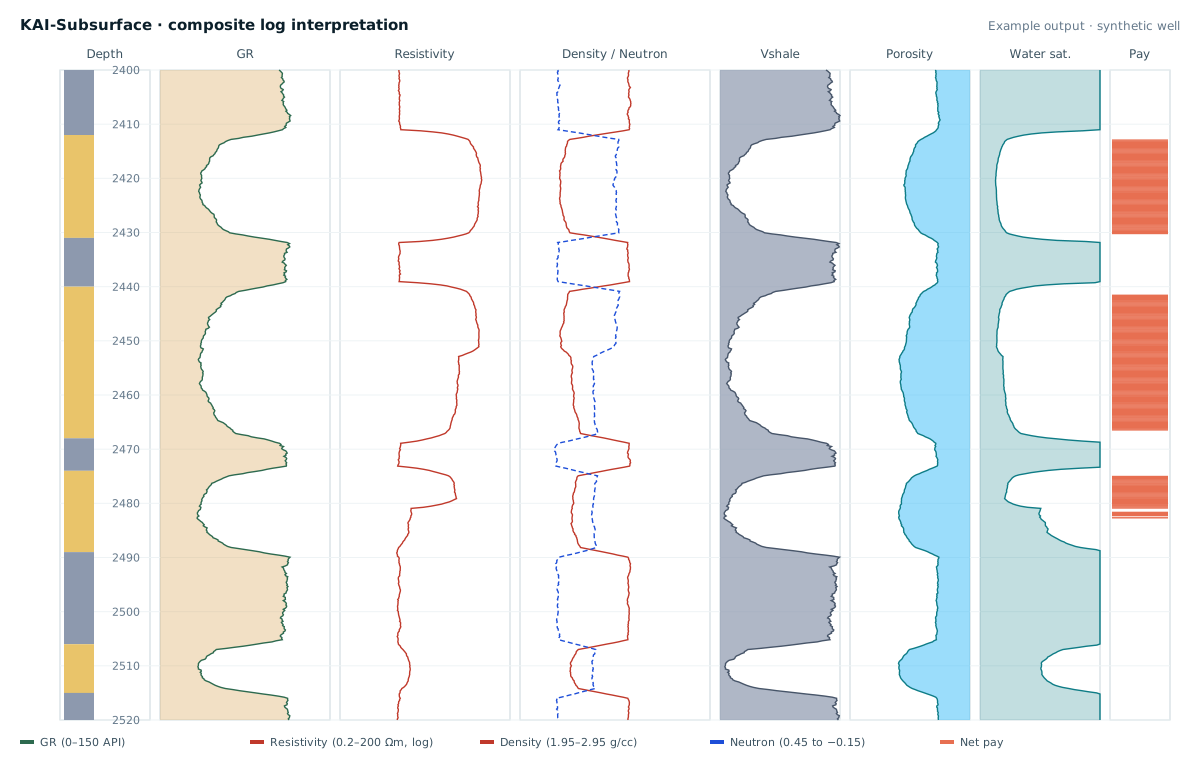
 KAI-Subsurface
Fixed-price well-log interpretation, geomodels and AI property prediction between wells.
Free plan · paid from $490 per well
Guides on this topic
- Geothermal doublet design: well spacing, flow rate and thermal breakthroughHow to set geothermal doublet spacing and rate: breakthrough time grows with spacing squared, rock stress caps injection, and results need a P10–P90.
- What 30 years of a hot-granite doublet look like: lessons from the Utah FORGE geothermal doubletSimulated 30-year forecast for the Utah FORGE doublet: 207 °C falls to 126 °C at 10 kg/s (P10–P90 114–143 °C), and what spacing, rate and stress teach.
- Carbon sequestration: what a CO2 storage site screening study must answer on capacity, injectivity and containmentCO₂ storage screening answers three questions: how much fits, how fast it goes in, and whether it stays. What each needs, with EU and IPCC criteria.
- Underground hydrogen storage modelling: the reservoir questions to ask firstHydrogen storage cycles gas in and out, so cushion gas, losses to microbes and rock, and seal integrity decide a site. The questions to ask first.
KAI-GeoEnergy: questions and answers
What does KAI-GeoEnergy answer?
What a geothermal well pair (a doublet) will deliver over 30 years, and how sure you can be: produced temperature, heat and pressure with P10–P90 in the Reservoir Lab, and full ensemble runs on the KAI engine from your workspace.
Is KAI-GeoEnergy free?
It is in live preview: the Reservoir Lab, full runs and KAI-Pilot are free while we finish it. Paid plans are not open yet; preview users get an introductory price when they open.
What is KAI-Pilot?
The AI copilot in the Reservoir Lab. Ask a question in plain words; it answers on the Utah FORGE case from stored KAI engine runs (simulated results) and shows where every number comes from, with a provenance table and checks.
How far can I trust the Utah FORGE forecasts?
The temperature model is checked against the measured log in well 58-32 and the forecasts against the 2024 circulation tests. We publish the misfits too: tracers arrive 20 to 50 times later than the model says. Forecasts are simulated and labelled; the notebooks that reproduce every number are open on GitHub. See the Utah FORGE case.